By Rosalie Turner
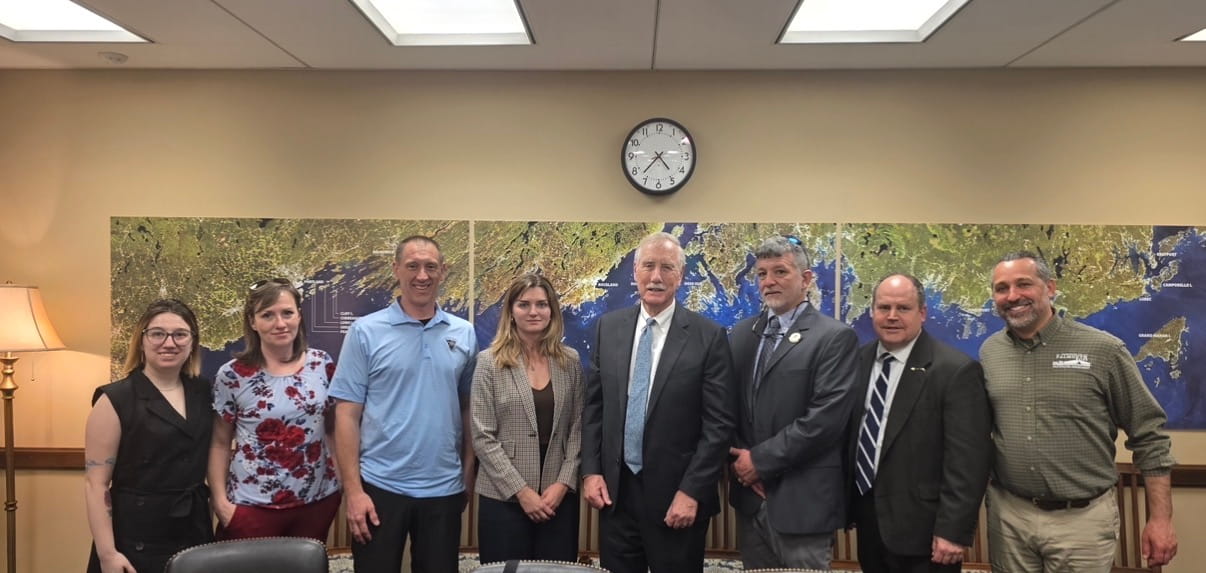
Across the table from me were a pair of eyes that had witnessed over thirty years of advocacy. Over three decades of legislating, constituent service and negotiation. Since kicking off a career in the 1970’s Independent Senator Angus King has been no stranger to the game of politics. As I sat there, collecting my thoughts and excitement, the walls of the Senate office building whispered to me, echoes of past debates, long nights, and the steady hum of democracy at work. During my experience at the National Water Policy Fly-In, I learned a thing or two about our representatives, their supporting staff and the complex decision-making system we call Congress.
I had missed the cherry blossoms by a week. It wasn’t the main reason for my visit but when I told friends and colleagues I would be going to DC for the 2026 National Water Policy Fly-In that was the first inquiry I received, whether or not I was going to see the famous pink cherry blossoms that decorate our Capitol’s National Mall during springtime. I have come to understand the evident lack of interest many have in the concept of water, wastewater, and its supporting infrastructure, that is, until you are the one impacted.
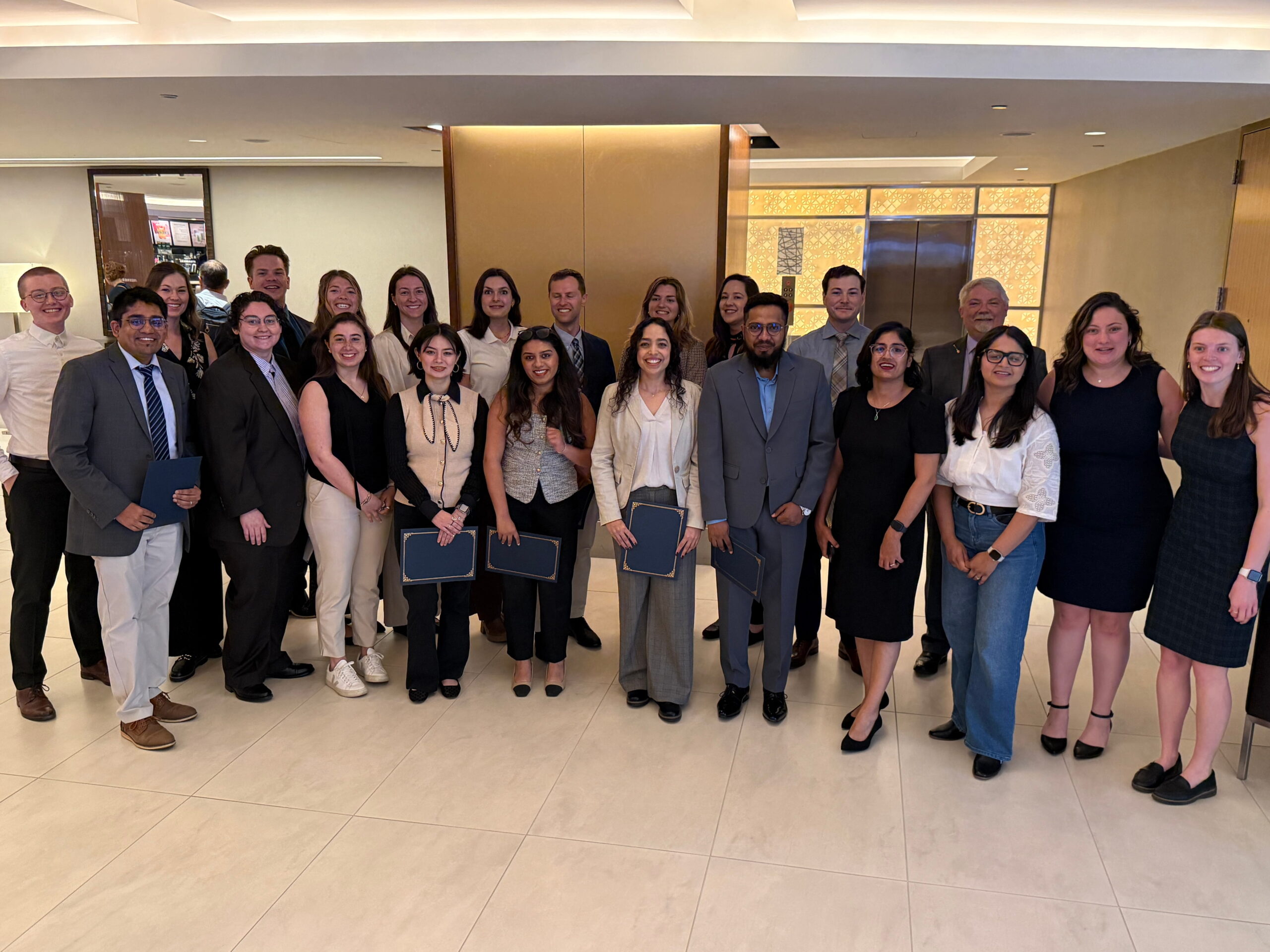
I arrived in Washington, D.C., on Monday, April 13th, joining a group of fellow young or new professionals who had received the same scholarship as I had. This scholarship was created and awarded through the Water Environment Federation (WEF) to provide space and opportunity to inspire water leadership and advocacy. That’s exactly what we were there to do: learn how to advocate for critical water policy needs, meet with representatives and congressional staff to share our stories, and give water a voice.
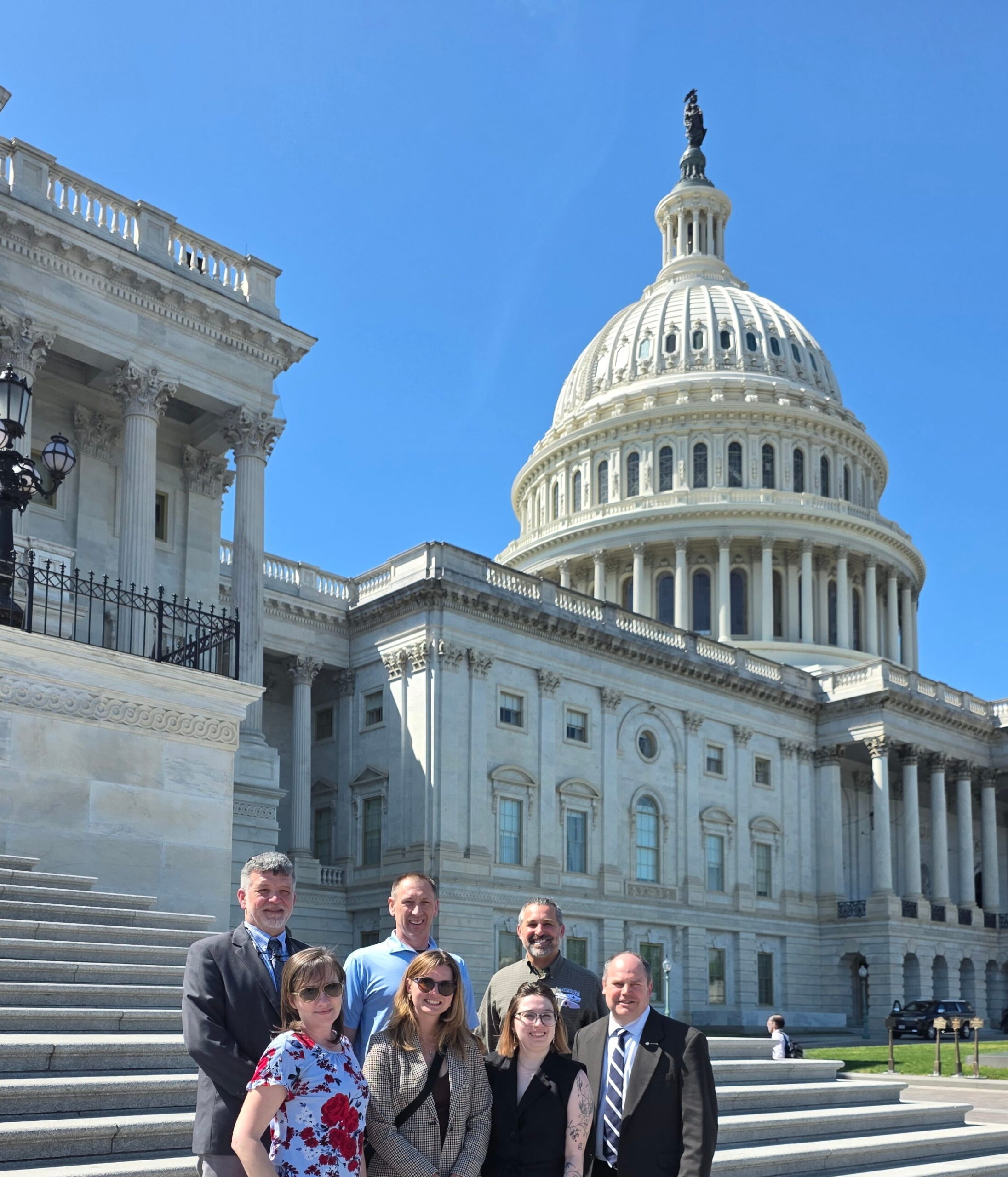
We participated in a Capitol tour where we walked through the Crypt, the Rotunda, and National Statuary Hall, and even had a moment to peer down a corridor, catching a glimpse of the Senate Chambers. Staring up at the Apotheosis of Washington, the famous painting that crowns the Rotunda ceiling, I couldn’t help but wonder how many eyes had taken in this masterpiece since its completion in 1865 by Constantino Brumidi. The room was eerie, not in a sinister way, it was more historically mysterious, daunting even. I realized I was standing at the heart of more than just an impressive structure, the Capitol is a symbolism of democracy, spirit and patriotism. It is the heart of civic engagement and legislative action, where issues I care about are debated. Before exiting the tour, I made sure to take note of the feeling those walls gave me, and of Hannibal Hamlin, Maine’s bronze statue in the National Statuary Hall, a fun fact I tucked into my back pocket.
The morning of Tuesday, April 14th, the fly-in scholars convened for a welcome breakfast full of fresh fruit, hot coffee, toast and networking chit-chat at the Hilton Washington DC National Mall The Wharf. WEF’s leadership and government affairs experts were present at the breakfast to share advocacy tips and provide an overview of WEF’s priorities. Warm inspiring remarks were shared by leaders including Keith Hobson, John Ikeda, and Scott Cummings, their words captivated the room as they emphasized on the importance of the work we were about to partake in. They highlighted the significance of coming together as a water community to connect with policymakers and help elevate key priorities for not only our sector but for everyone because water is bipartisan.
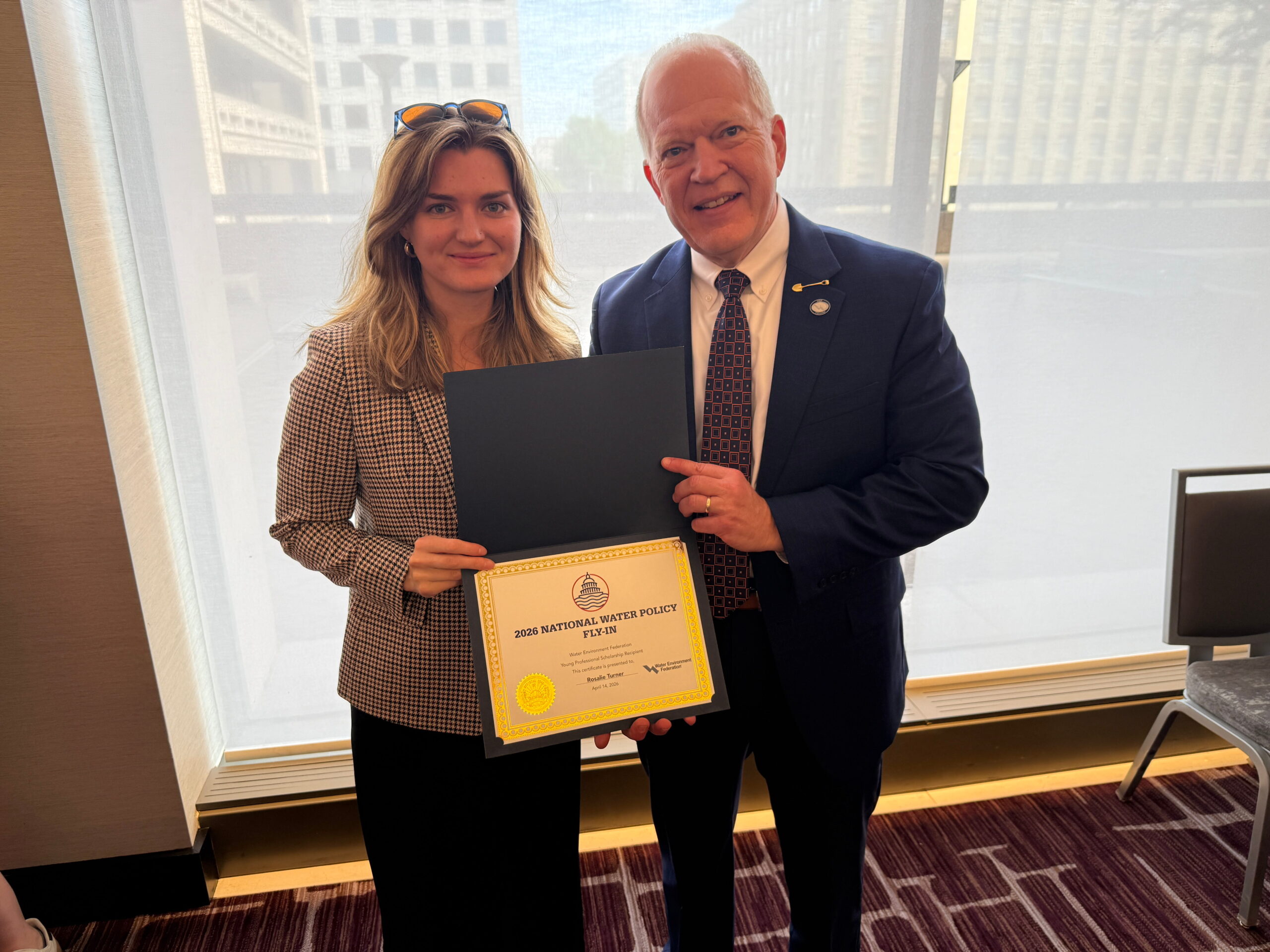
Congressional meeting tips and reflective insight on the scholarship experience were shared by Guy Yager and Carol Martinson. Kristiana Dragash spoke about WEF’s Water Advocates Program and Steve Dye closed with clarifying remarks and answered questions. The informational session was motivating, you could feel the excitement in the room and eyes had lit up with anticipation. We proceeded to accept our scholarship certificates before settling back into our seats for WEF’s Government Affairs Community Meeting. We listened and learned about policy updates, details regarding the fly-in, opportunities and upcoming events.
The National Water Policy Fly-In plenary session kicked off with insights from water sector leaders and policymakers on current federal priorities, providing context and direction for congressional engagement. This experience included discussions on U.S. EPA water priorities, congressional perspectives, and presentations on data centers and AI, along with other key issues such as funding, PFAS, affordability, and the WIPPES Act. All of which were priorities in our congressional discussions. Tuesday was meant to prepare us, and Wednesday’s agenda was left open for our meetings on Capitol Hill.
I would like to note that multiple events were occurring simultaneously throughout the week, and personal prioritization was key. As an affiliate representing the Maine Water Environment Association (MEWEA), I had the honor of traveling with their delegation, which had arranged our congressional meetings for both the 14th and 15th (catch the reps when you can!) After a lunch on the wharf with the New England Water Environment Association (NEWEA), I joined MEWEA’s advocacy team and headed to our first meeting with Representative Jared Golden.
It’s hard to articulate exactly what my expectations were for that first meeting. Highly engaged and meaningful conversations where we would walk away with a clear plan, truly feeling like we shifted a perspective or a line in a piece of legislation that would have a cascading domino effect of positive results? In an ideal world, it was something like that. But I dream big. I knew the meeting was not going to be exactly what I had conjured up in my mind, and I had a feeling this was just the beginning.
The Congressional meetings ranged from highly engaged correspondents to what appeared to be indifference. Some discussions were held directly with representatives, while others were only with their staff. Across the board, it became clear that there were genuine misconceptions about the critical tasks and needs we were trying to communicate. I was proud to be surrounded by people who had been in the industry for years with a plethora of knowledge, listening to them tell their stories. Passion and urgency flowed from the advocacy team. It felt heard at times, but not quite matched. Maybe that’s how it starts. It is interesting to me that these topics, expected to be discussed in under thirty minutes, in a round robin table format, are, in my eyes, arguably the most critical policy needs the country is currently facing.
When I think of what is important, I think of health, a home, clean water, and community. Water infrastructure is the backbone and foundational thread of all these concepts woven together creating security. Historically, dating back to ancient civilizations, the foundation of development and infrastructure has always been built around water. Water is not only essential for sustaining life; it has long been a critical tool for growth, and when it isn’t accessible, progress is inevitably constrained. In a nutshell, that’s what kept running through my mind during those Congressional meetings. For a community to thrive, for affordable housing initiatives to succeed, for public health to be protected, our water infrastructure must be at the forefront of policy discussions. Without it, our growth is inherently limited.
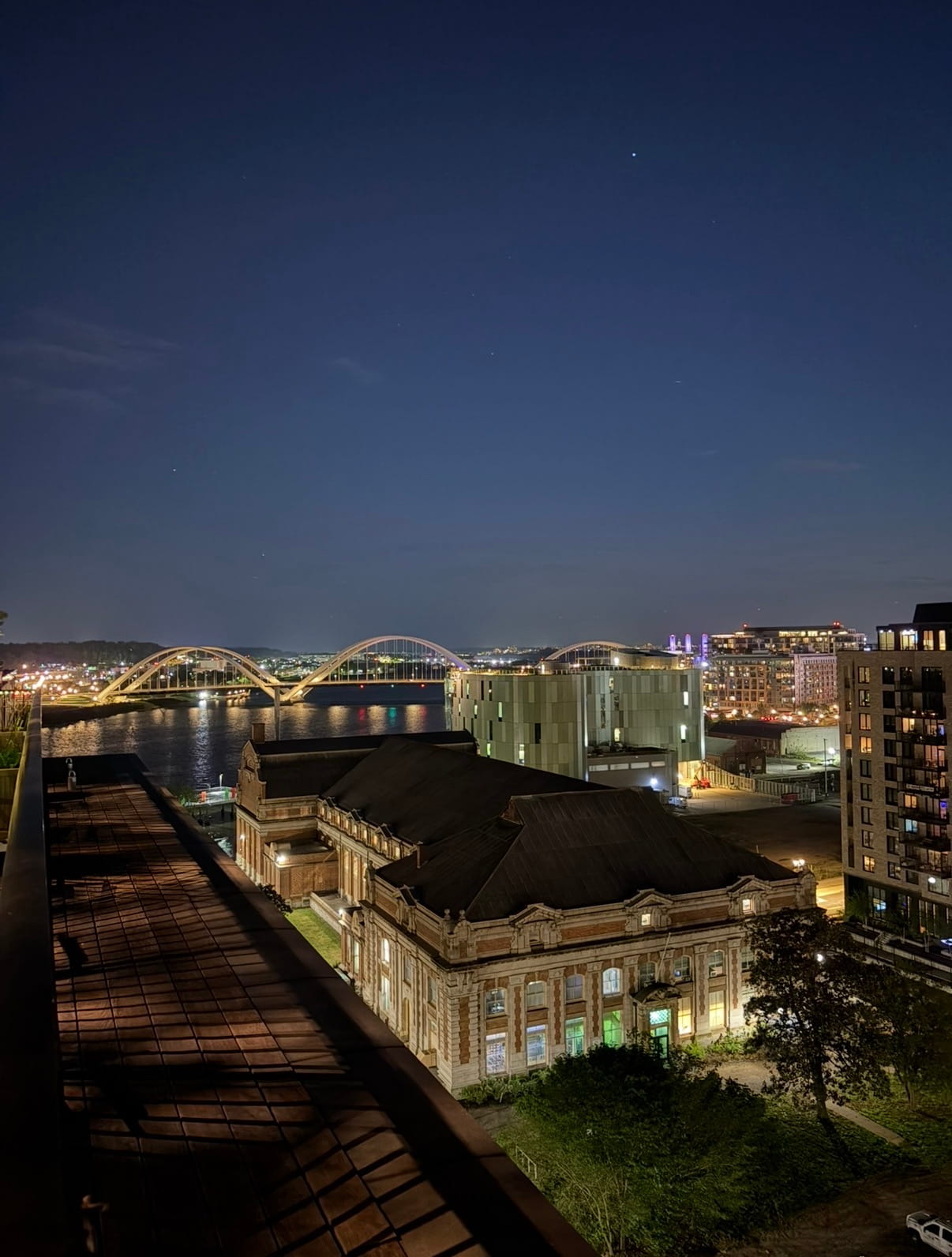
Tuesday night ended with a water week reception that was held at the outdoor rooftop lounge above DC Water overlooking where the Anacostia and Potomac Rivers connect. This was a moment for new connections to be made and to strengthen previous ones. There was a breeze that provided refuge from the 90‑degree weather that day, and the sun was setting, casting a warm glow on the smiling faces of passionate water industry professionals. The river was a reminder of the work we were there to do. I reflected on the new knowledge I now held and the questions that had yet to be answered. I plan to return, not only to see the pink cherry blossoms but to continue to find my voice in advocating for what people and the environment need, protection in our water systems. Because without it, our health, homes, waterways and security are at risk.
Special thanks
I would like to thank the Association of Metropolitan Water Agencies (AMWA), National Association of Clean Water Agencies (NACWA), The Water Research Foundation (WRF), Water Environment Federation (WEF), WateReuse Association, for hosting the National Policy Fly-In. A special thanks to WEF’s leaders and experts for creating space and an incredible opportunity for young and new water professionals to learn and advocate. I would also like to thank Jennifer Sabater for being such a supportive role for the scholarship recipients, my NEWEA mentor Julia Flanary, and of course MEWEA’s advocacy team, Andre Brousseau, Amanda Smith, Rob Pontau, Scott Fermin, Dan Marks and my YP buddy Josie Fazio. Thank you to any names I missed that made this scholarship and opportunity possible.